My great-uncle crossed the Atlantic after the Second World War with little more than hope in his luggage.
He was not one of those Europeans who went to America in search of adventure. He went because history had made the old world small, suspicious and morally exhausted. Germany, for him, was not merely a country recovering from ruins. It was a place from which one had to gain distance in order to breathe.
Every few years, he returned.
And when he did, America entered our German family home long before any of us had seen it.
It came in the form of a large tin of smoked and salted almonds. And in bags of marshmallows.
In the late 1960s and early 1970s, neither belonged to the known culinary order of our household. The almonds, however, conquered Christmas almost immediately. From then on, they were no longer foreign; they became tradition. The marshmallows found their own, slightly absurd European destiny on summer barbecue nights — floating somewhere between childhood astonishment, transatlantic glamour and the very German solidity of a pork neck steak.
This, too, was America: sweet, smoky, excessive, irresistible.
He lived in Milwaukee. He belonged to the exclusive South Shore Sailing Club. He sailed in its iconic regatta across Lake Michigan.
To a boy in Germany, this sounded less like a biography than a film script: the wide American water, the white sails, the self-made man, the successful uncle from across the ocean.
He was not simply my great-uncle.
He was Uncle America.
Without ever intending to, he became my first encounter with what would later be called the American Dream. And the dream, as I understood it then, was not primarily about money. It was about possibility. About the almost outrageous idea that a life did not have to remain where history had placed it.
Years later, at the height of the protests against the Pershing missiles, in which I took part, he asked me a question I have never forgotten.
“Are you supporting the communists?”
At the time, I found it unfair. Too blunt. Too Cold War. Too American, perhaps.
Today, I understand the place from which the question came.
He had left Germany also because he had known oppression under the Nazis. Freedom, for him, was not an abstract Western slogan, not a word printed on campaign posters or engraved into monuments. Freedom was biography. It was the difference between fear and departure. Between silence and a new beginning.
And on his political compass, one thing was clear: communists and Nazis were both enemies of freedom.
On that, he was right.
Freedom was paramount to him.
It is paramount to me.
That is why America still matters.
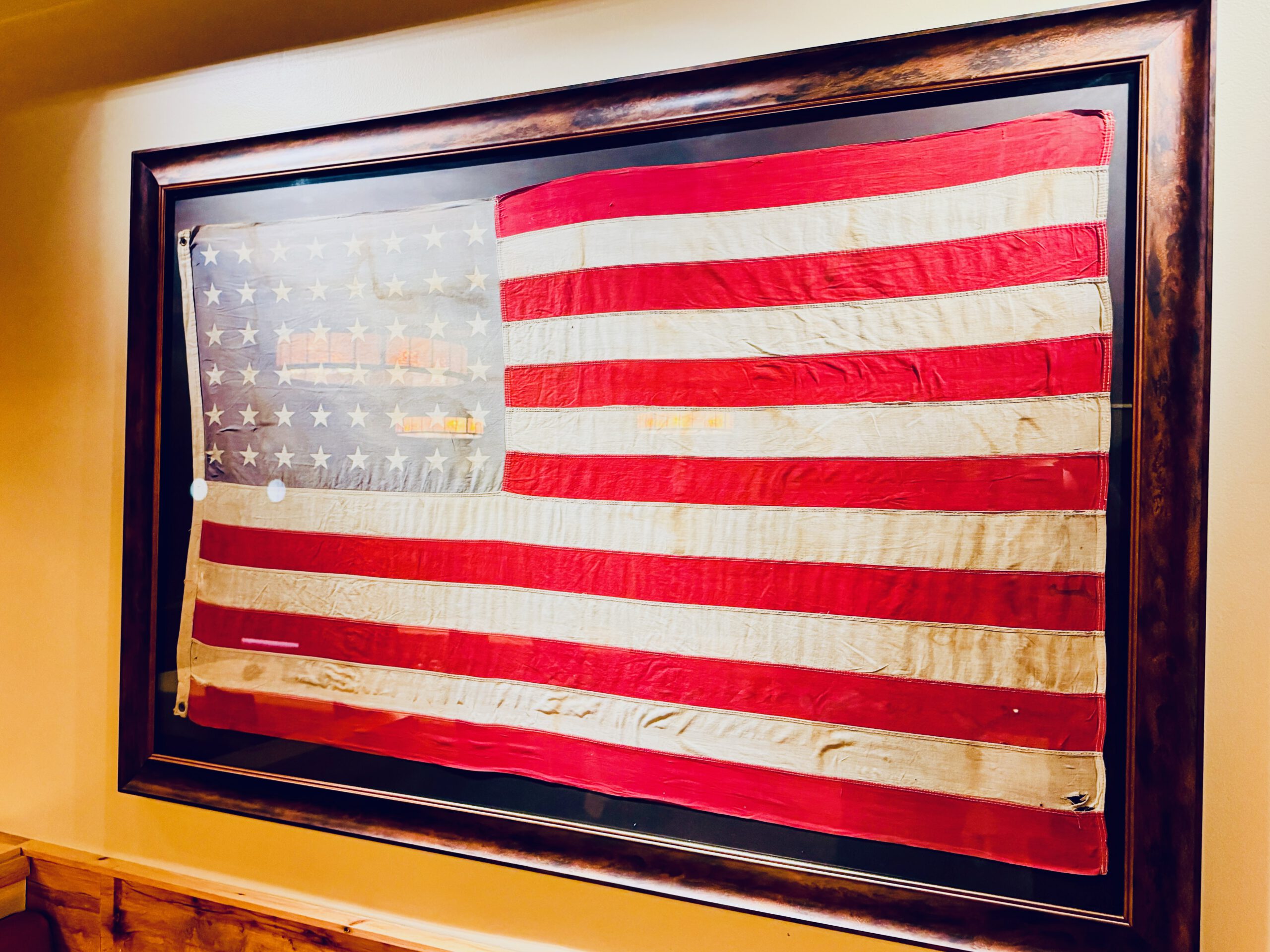
For much of the twentieth century, the United States was more than a country. It was an argument about the future. The nation that helped liberate Europe. The home of Hollywood, NASA, Silicon Valley and the civil rights movement. The place where immigrants reinvented themselves and entrepreneurs reinvented entire industries.
Its greatest export was never Coca-Cola, Apple or the blue jeans.
Its greatest export was optimism.
And yet, as the United States approaches its 250th birthday on this Fourth of July, that optimism has become more complicated.
Around the world, admiration has not disappeared. But it has become entangled with doubt. America still attracts talent, capital, ambition and imagination. Its universities remain intellectual magnets. Its companies shape the architecture of our daily lives. Its culture still fills our playlists, our screens, our language.
And yet another America now dominates the headlines.
Polarization. Institutional distrust. Culture wars. Disinformation. Violence.
The country that once taught much of the world to believe in democratic resilience is now asked, with increasing urgency, whether its own democracy is resilient enough.
Beautiful.
And terrible.
Often at the very same time.
Perhaps this has always been America’s paradox: a nation capable of extraordinary generosity and extraordinary self-destruction. Of breathtaking innovation and breathtaking inequality. Of inspiring the world while arguing, ferociously and permanently, with itself.
Maybe this contradiction is not a temporary flaw.
Maybe it is part of the country’s operating system.
Europe often looks at America through today’s headlines. Americans often look at Europe through yesterday’s stereotypes. Neither view is sufficient. Beneath the noise remains another country: millions of ordinary people building businesses, raising families, volunteering in communities, welcoming newcomers, arguing in diners, hoping for their children, and believing — sometimes against all evidence — that tomorrow can still be better than today.
That quiet optimism rarely trends.
But it is still there.
I think of my great-uncle and his America.
That America existed.
So does today’s America.
Neither tells the whole story.
The United States at 250 is neither the flawless beacon some nostalgically remember nor the failed experiment some now declare it to be. It remains what it has perhaps always been: a country that magnifies the best and the worst of modern society.
A place where dreams and disappointments live on the same street.
At 250, America deserves neither blind celebration nor easy condemnation. It deserves something more difficult, and therefore more honest.
Nuance.
Because if the past two and a half centuries have taught us anything, it is that America has never stopped reinventing itself.
And perhaps that — more than wealth, power or glamour — is the American Dream that once fascinated a German boy who knew America first as almonds, marshmallows, white sails on Lake Michigan and an uncle who had crossed the ocean in search of freedom.
Happy Birthday, America.
Thank you for inspiring us, frustrating us, challenging us — and reminding us that freedom is never inherited forever.
Not yours.
Not ours.
Schreibe einen Kommentar